
How Hawaii Residents Can Escape High-Interest Debt in 2026: Comparing Debt Consolidation and Settlement Options to Regain Financial Freedom
How Hawaii Residents Can Escape High-Interest Debt in 2026: Comparing Debt Consolidation and Settlement Options to Regain Financial Freedom

If you're living in the islands and feel like your paycheck disappears the moment it hits your bank account, you're not imagining things. I've talked to so many local families this year who are genuinely struggling, and it's rarely because of reckless spending. It's the reality of island life in 2026 — grocery bills that make mainland friends gasp, gas prices that never seem to drop, and rent that eats half your income before you've even bought dinner. When credit cards become the buffer for everyday shortfalls, interest rates north of 24% or 25% can turn a manageable balance into a monster in just a year or two.
What makes this especially frustrating is that Hawaii's cost-of-living pressures aren't going away anytime soon. Tourism-dependent wages haven't kept pace with housing and food costs, and many households are quietly carrying balances across three, four, even five different cards. The good news? There are real, structured paths out of this — and understanding them clearly is the first step toward breathing easier.
Understanding Your Debt Relief Options
When people start researching how to get out from under high-interest debt, they usually run into two main strategies: debt consolidation and debt settlement. They sound similar, but they work in very different ways, and choosing the wrong one for your situation can actually set you back. Let's break down what each one actually means before you decide anything.
What Is Debt Consolidation?
Debt consolidation means rolling multiple debts — think several credit cards, maybe a personal loan — into a single new loan or repayment plan, ideally with a lower interest rate than what you're currently paying. Instead of juggling five due dates and five different minimum payments, you make one predictable payment each month. For someone with decent credit and steady income, this can dramatically simplify life and save real money on interest over time.
This route works best for people whose debt is high but not yet unmanageable — you're keeping up with payments, just barely, and the interest is what's killing you. A consolidation loan or a nonprofit debt management plan can lower that interest burden significantly without requiring you to negotiate down what you owe.
What Is Debt Settlement?
Debt settlement is a different animal entirely. Here, a company (or you, directly) negotiates with your creditors to accept a lump-sum payment that's less than the full amount owed — sometimes 40% to 60% less. This path is generally reserved for more serious financial hardship, where making even minimum payments has become unrealistic and you're at risk of default anyway.
Settlement typically involves stopping payments to creditors while funds accumulate in a dedicated account, which is used later to make the negotiated payoff. It can provide real relief, but it comes with tradeoffs I'll cover shortly — including a temporary hit to your credit that's more significant than what consolidation typically causes.
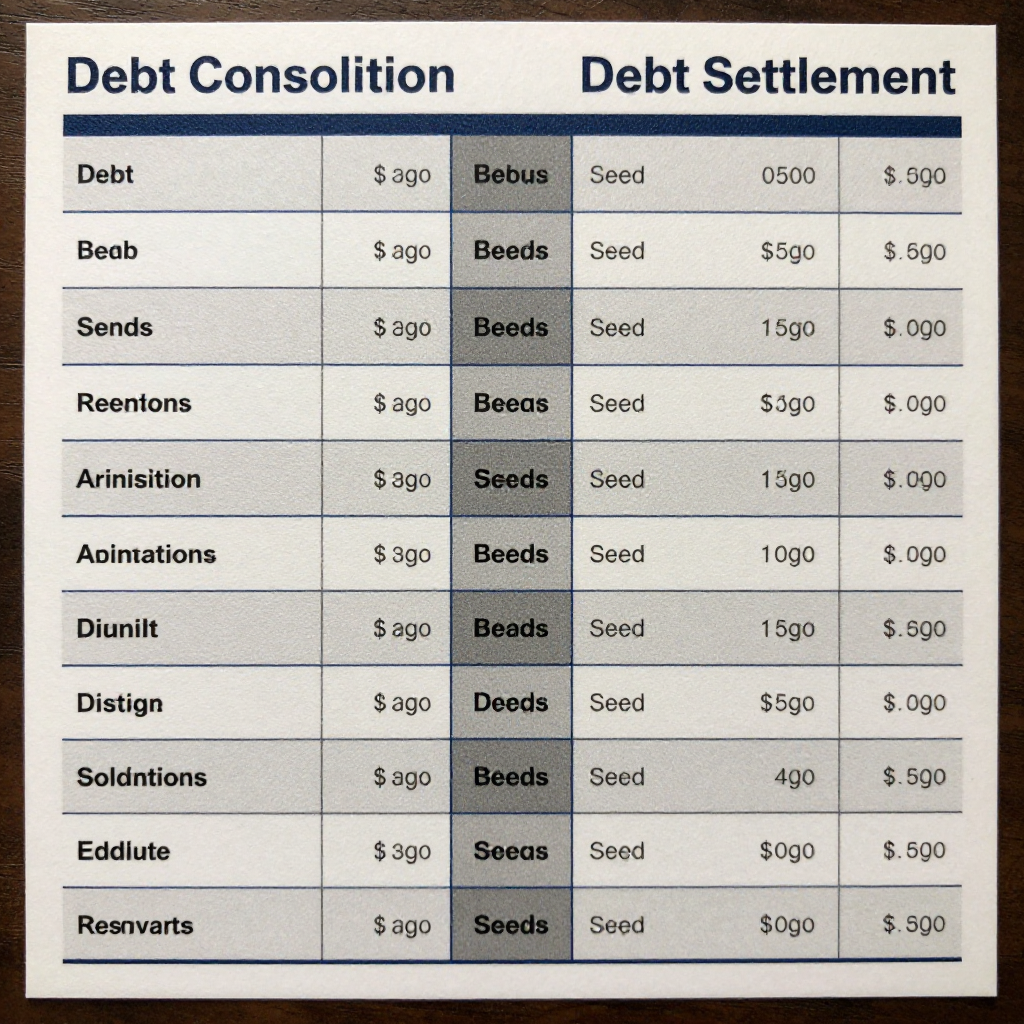
Debt Consolidation vs. Debt Settlement — Key Differences
Side by side, these two options differ in almost every practical way that matters to a household budget:
- Cost: Consolidation loans have interest and possibly origination fees, but you repay the full balance. Settlement companies charge a percentage of the settled debt (often 15–25%), but you may end up paying less overall since the principal itself is reduced.
- Timeline: Consolidation plans typically run 2–5 years. Settlement programs often take 2–4 years as well, but progress can feel slower at first since payments go into a savings account rather than directly to creditors.
- Eligibility: Consolidation generally requires a fair-to-good credit score to qualify for favorable rates. Settlement doesn't require good credit — in fact, it's designed for people whose credit is already struggling.
Impact on Credit Score and Long-Term Finances
This is where the two paths really diverge. Debt consolidation, especially through a management plan or a well-structured loan, tends to have a milder impact on your credit — sometimes even improving your score over time as you make consistent, on-time payments. Settlement, on the other hand, usually involves missed payments during the negotiation phase, which can cause a noticeable dip in your credit score, often for a year or two. It typically recovers, but it's a rockier road in the short term.
Long-term, both paths can lead to genuine financial freedom — the question is really about which bumps in the road you're better positioned to handle right now.
How to Choose the Right Path for Your Situation in Hawaii
Before deciding, ask yourself a few honest questions: How much total debt am I carrying, and relative to my income, does it feel manageable or overwhelming? Is my income stable enough to commit to consistent monthly payments for the next few years? And how important is protecting my credit score right now — am I planning to buy a home or car soon, or is my priority simply getting out from under this weight as fast as possible?
If your debt is high but you're still current on payments, consolidation is often the gentler, more credit-friendly choice. If you're already falling behind, facing collections calls, or seriously considering bankruptcy, settlement might actually be the more realistic option. Either way, don't go it alone or pick the first company that shows up in a Google ad. I'd strongly recommend comparing multiple licensed providers before signing anything — a solid starting point is this curated resource on debt consolidation Hawaii, which lists reputable local and national companies that specifically work with Hawaii residents on unsecured debt.
Common Mistakes to Avoid When Seeking Debt Relief
I've seen too many people get burned by rushing this decision, so let me flag the biggest pitfalls:
- Falling for scams: Legitimate companies won't demand large upfront fees before doing any work. If a company promises to 'erase' your debt instantly, walk away.
- Ignoring the fee structure: Both consolidation loans and settlement programs come with costs. Read the fine print so you know exactly what you're paying for.
- Forgetting tax implications: Forgiven debt through settlement can sometimes be counted as taxable income by the IRS. Talk to a tax professional before you sign a settlement agreement.
- Not shopping around: Rates, fees, and program lengths vary a lot between providers. Get quotes from at least three companies before committing.
Practical Steps to Start Your Debt-Free Journey in 2026
Ready to actually move forward? Here's a simple checklist to get you started this month:
- Sit down and review your full budget — every subscription, every bill, every income source.
- Gather all your debt documentation: balances, interest rates, minimum payments, and creditor contact info.
- Request quotes and program details from several debt relief companies serving Hawaii residents.
- Compare the total cost and timeline of each offer, not just the monthly payment.
- Set a realistic target date for becoming debt-free, and build in some flexibility for unexpected expenses.
Conclusion — Taking Control of Your Financial Future in Hawaii
Whether debt consolidation or debt settlement makes more sense for you, the truth is that both paths can genuinely lead to financial freedom when they're matched to your actual circumstances. The worst move you can make is doing nothing while interest quietly compounds month after month. Take an honest look at your numbers, compare your options carefully, and take that first step today — your future self, sipping coffee without a mountain of debt hanging over you, will thank you for it.